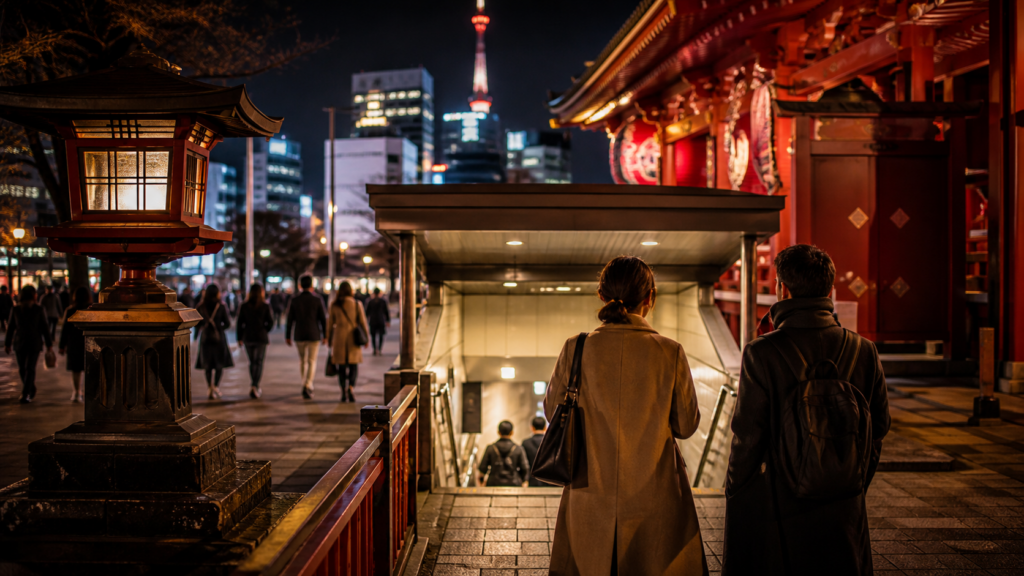
Japan is easy to navigate, remarkably safe, and famous for considerate service. Yet many everyday rules are communicated through context rather than signs. A visitor is unlikely to cause a serious incident by making an honest mistake, but loud calls on trains, ignoring a no-photo notice, or entering a bath without washing can make others uncomfortable.
This 2026 guide explains 15 mistakes to avoid in Japan, covering etiquette, public transport, restaurants, hot springs, payments, connectivity, and emergencies. Rules differ by city and venue, so always follow current signs and staff instructions.
15 mistakes to avoid in Japan
- Making loud calls on trains and buses
- Cutting queues or blocking doors
- Treating escalator customs as fixed law
- Littering or using the wrong recycling bin
- Smoking outside designated areas
- Photographing temples, shops, or private property without permission
- Missing the boundary where shoes must come off
- Entering an onsen before washing
- No-showing or arriving very late for reservations
- Assuming tipping is required
- Relying only on credit cards
- Ignoring last trains and opening hours
- Posting identifiable strangers without consent
- Overlooking customs, medicine, and tax-free rules
- Traveling without disaster information
1. Do not make loud calls on public transport
Keep calls brief and quiet, use headphones, and never play videos through a speaker. Conversations are fine at a considerate volume. During rush hour, move backpacks to your front and keep luggage out of aisles.
2. Let passengers exit before boarding
Queue at the platform markings and wait for people to leave the carriage. Do not stop immediately after a gate or at the end of an escalator to check a map; move to the side first. Prepare your IC card before reaching the reader.
3. Do not force the “stand on one side” escalator habit
Tokyo and Osaka have different standing customs, but many operators now ask passengers to stand still in two lines for safety. Follow floor markings and announcements instead of telling others to clear a side.
4. Carry your rubbish until you find the right bin
Street bins can be scarce. Keep a small bag for wrappers and take them back to your hotel if necessary. Bottle bins beside vending machines are normally for drink containers, not mixed travel rubbish.
5. Smoke only in approved places
Many cities restrict street smoking and may issue fines. Heated tobacco can be covered by the same rules. Check entrance signs at restaurants and use marked smoking rooms or outdoor smoking areas.
6. Ask before photographing temples, shops, and people
Religious sites may prohibit photos of halls, statues, ceremonies, and worshippers. Never enter private lanes or residential property for a better angle. A sign allowing photography does not automatically allow tripods, drones, or livestreaming.
7. Notice where shoes must be removed
Ryokan, temples, homes, and some restaurants have a raised entrance, shoe lockers, or slippers. Remove shoes there, and remove slippers before stepping onto tatami. Never walk back into the main room wearing toilet slippers.
8. Wash before entering an onsen
Shower thoroughly at the washing area, keep towels and swimwear out of the bath, and tie up long hair. Tattoo policies vary: some accept covers or private baths, while others restrict entry. Check before booking.
9. Do not no-show for a restaurant booking
Small restaurants and course-menu venues prepare food and staffing around reservations. Contact the venue as soon as plans change and follow its cancellation policy. Call if you will be late, as your table may otherwise be released.
10. Tipping is generally unnecessary
Ordinary restaurants, taxis, and hotels do not expect a US-style tip. Cash left on a table may be treated as forgotten money. A sincere “arigato” is usually enough; service charges may already appear on the bill.
11. Keep some yen in cash
Cards and mobile payments are common in cities, but small restaurants, temples, lockers, rural buses, and ticket machines may still require cash. Carry smaller notes and coins as well as more than one card.
12. Check last trains and actual business hours
Urban rail systems do not run 24 hours. Save your route and last-train time before a night out. Google listings can be outdated, so confirm last orders, closed days, and reservation requirements on official pages.
13. Protect other people’s privacy
Get permission before close-up photos of staff, performers, or pedestrians, and again before posting. Avoid visible name badges, children, house plates, and vehicle numbers. “Photos allowed” is not the same as “livestream allowed.”
14. Check medicine and customs restrictions
Meat products, plants, medicines, and other goods can be restricted. Even common medicine may require confirmation depending on ingredients and quantity. Carry prescription documents and consult official Japanese customs and health guidance before departure.
15. Prepare for earthquakes and typhoons
Check emergency exits at your hotel and enable emergency alerts. During strong shaking protect your head; near the coast, move uphill if a tsunami risk is announced. Police are reached at 110 and ambulance/fire services at 119.
Pre-departure checklist
- Arrange an eSIM, SIM, or roaming plan
- Prepare an IC transit card
- Carry yen and a backup card separately
- Save last-train routes and hotel details offline
- Check medicine and food import rules
- Prepare insurance and emergency contacts
Frequently asked questions
Can I travel in Japan using only English?
Major airports, stations, hotels, and attractions have extensive English signs. In smaller towns, a translation app and the written Japanese address are useful. A few polite phrases make interactions warmer.
Can I eat on trains?
Avoid strong-smelling meals on commuter trains and subways. Eating a boxed meal is common on the Shinkansen and many limited express trains. Take all rubbish with you.
Is free Wi-Fi enough?
It is available at airports, hotels, and many stations, but coverage is not continuous. Reliable mobile data is safer for maps, booking changes, translation, and emergency alerts.
Final takeaway
Most Japanese etiquette comes down to one idea: do not make a shared space harder for others to use. Queue, lower your voice, ask before taking photos, and leave places clean. When unsure, politely ask rather than worrying about being perfect.